Professional Carpet Cleaning in San Diego: The Complete Homeowner's Guide (2026)
Carpet is the largest air filter in your house — and the only one nobody ever changes. This is the guide we wish every San Diego homeowner had before booking: how the methods actually differ, what the work really costs, how often it needs doing, and the exact questions that separate a real technician from a truck with a wand.
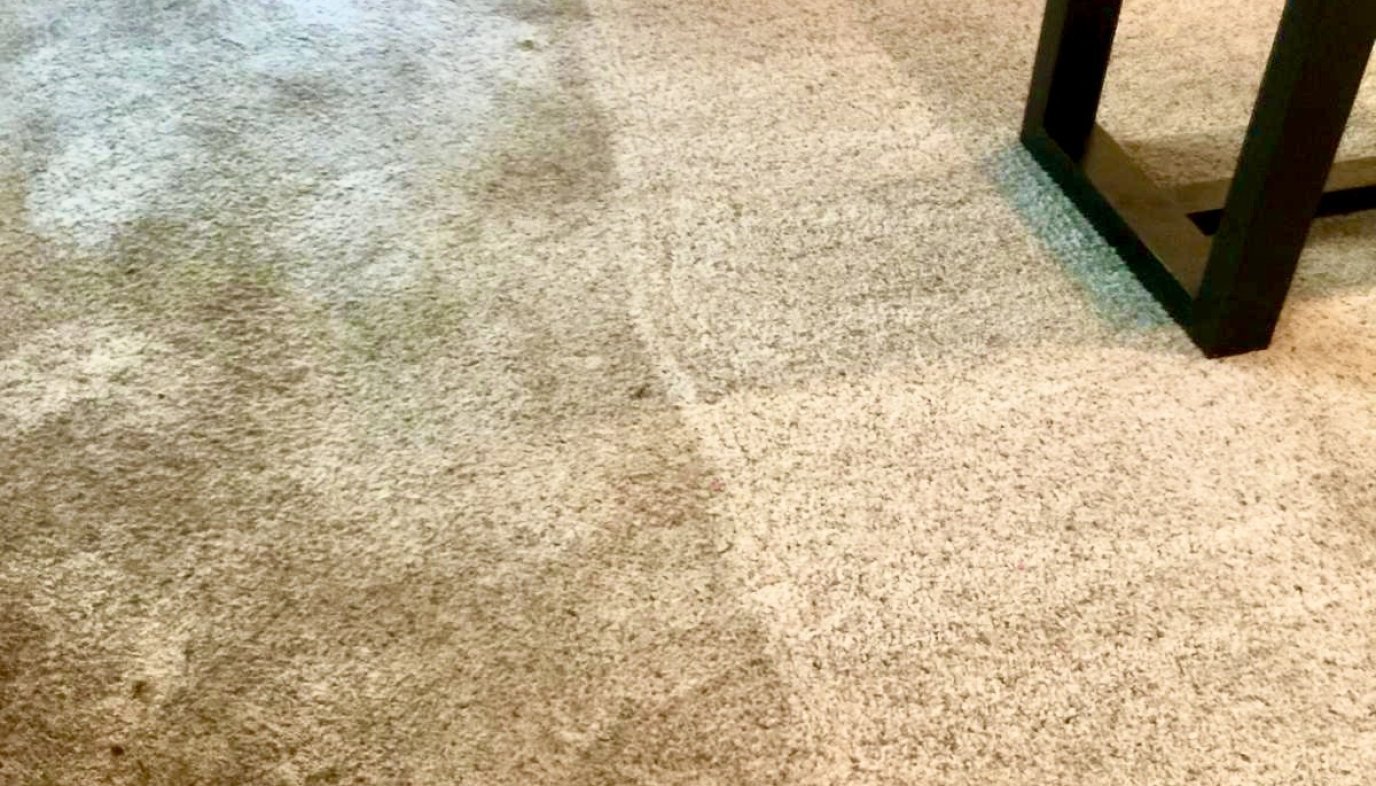
Most people book a carpet cleaning for the wrong reason. They see a stain, call somebody, the stain goes away, and six weeks later it comes back darker. Meanwhile the thing that actually mattered — pounds of grit, dander, pollen and skin cells at the base of the pile where no vacuum reaches — never moved.
That gap between "looks clean" and "is clean" is the whole subject of this guide. Carpet fibers are dense, upright and slightly sticky with soil film, which makes them extraordinarily good at trapping particulate — a feature, until the filter saturates and starts releasing what it captured every time somebody walks across it.
San Diego adds its own complications. Fine beach sand travels home from La Jolla and Del Mar and works its way to the carpet backing, where it acts like sandpaper on every step. Coastal humidity in Coronado behaves nothing like the dry inland heat of Escondido or Poway. Year-round open windows mean year-round pollen. And with so much local housing stock in rentals and vacation properties, carpet takes more traffic per year than the manufacturer ever modeled.
This is written for homeowners who want to make one good decision instead of five mediocre ones. Where a recommendation is warranted we point to Imperial Carpet Cleaning, a San Diego company with 15+ years in the field and certified technicians.
Why professional carpet cleaning matters more than people think
Your vacuum is not doing what you think it is doing
A good residential vacuum removes surface debris and some loose soil from the upper third of the pile. It does not remove the bonded soil film coating each fiber, and it does not reach the hard particulate sitting at the base near the backing. That portion stays until something flushes it out with heat, chemistry and suction.
Indoor air quality is the real argument
Dust mites, pet dander, mold spores, pollen and cooking residue all settle into carpet, and when the reservoir is full, ordinary foot traffic aerosolizes it. Households with asthma or seasonal allergies usually notice a difference within a day or two of a proper deep clean — not because the carpet smells nicer, but because the reservoir got emptied.
It is a cost decision, not a cosmetic one
Carpet replacement runs $3 to $9 per square foot installed. Professional cleaning costs a fraction of that and, done on schedule, roughly doubles usable carpet life. Sand and grit are abrasive: carpet doesn't get dirty and then wear out — it wears out because it is dirty.
Warranties usually require it
Most major manufacturers require professional hot water extraction at defined intervals — commonly every 12 to 18 months — and require you to keep the receipts. Homeowners tend to discover this at the worst possible moment, filing a claim on premature wear and being asked for documentation they never collected.
The three main carpet cleaning methods, honestly compared
Nearly everything on the market is a variation of three approaches. A company that offers only one and insists it is right for every situation is telling you about their equipment, not about your carpet.
1. Hot water extraction (what everyone calls "steam cleaning")
This is the deep clean. A pre-treatment breaks the bond between soil and fiber, dwell time lets the chemistry work, then water heated to roughly 200°F is injected under pressure and immediately vacuumed back out with the suspended soil. Despite the name, it is not literally steam.
Best for: annual and semi-annual deep cleans, pet households, allergy concerns, heavily soiled traffic lanes, and anything with restoration in mind.
Trade-off: longer dry time — typically 4 to 8 hours in San Diego's climate with decent airflow.
Watch for: equipment. A truck-mounted unit generates far more heat and vacuum than a portable machine. For residential deep cleaning, steam cleaning in San Diego done with truck-mounted extraction is the benchmark; a portable is a compromise reserved for high-rises where hose runs make truck mounts impractical.
2. Dry cleaning / very low moisture (VLM)
A dry or nearly dry compound carrying solvents and detergents is worked into the pile with a counter-rotating brush machine, absorbs the soil, and is vacuumed away. Moisture use is minimal.
Best for: fast turnarounds, offices that can't close, delicate fibers, and homes where a long dry time isn't workable.
Trade-off: it does not reach as deep — excellent maintenance, poor substitute for annual extraction.
Watch for: compound left in the pile if the post-vacuum is rushed.
3. Encapsulation
A polymer detergent is applied and agitated; as it dries it crystallizes around soil particles, and the resulting brittle crystals are removed by normal vacuuming over the following days.
Best for: commercial carpet, interim maintenance, large areas on a budget; dries in about an hour.
Trade-off: genuinely interim. Encapsulating a residential carpet that has never been extracted is a clean coat over a full reservoir.
The short version
Hot water extraction is your baseline deep clean, on a 12-to-18-month cycle at minimum. Low-moisture methods are the right tool when time, fiber type or building access rules extraction out. A competent company diagnoses first and then picks — it doesn't sell you the one method it owns a machine for.
How often should you clean your carpets?
The honest answer depends on your household, not on a calendar. Use this as a starting point:
- Every 12–18 months — one or two adults, no pets, shoes off at the door, light traffic.
- Every 6–12 months — families with children, or one pet, or a household where shoes stay on indoors.
- Every 3–6 months — multiple pets, diagnosed allergies or asthma, home-based businesses with client traffic, or anyone who has just finished a renovation.
- Every 3–4 months — vacation rentals and short-term rentals, where turnover compresses years of normal traffic into months.
San Diego-specific factors that shorten the interval
Coastal salt and sand. Homes in Coronado, La Jolla, Del Mar and the beach communities collect fine abrasive sand that migrates to the carpet base, and salt air keeps humidity high enough to make soil film tackier.
Inland dust and dry heat. Escondido, Poway and Rancho Bernardo face the opposite problem: fine dry dust, more open windows, and Santa Ana conditions that push particulate indoors in bulk.
A long allergy season. No real winter means pollen most of the year — there is no dormant period during which the carpet stops loading up.
Signs you are already overdue
- Traffic lanes are visibly darker than the protected carpet under furniture.
- The carpet smells faintly musty when the room has been closed for a day.
- Fibers feel crunchy or matted rather than soft and upright.
- Allergy symptoms are worse indoors than outdoors.
- Stains you cleaned yourself keep reappearing — wicking from the pad.
What carpet cleaning costs in San Diego (2026)
Pricing here follows one of two models. Per-room pricing is simpler to quote over the phone; per-square-foot pricing is more honest, because a 400-square-foot great room is not a "room" in the same sense a 90-square-foot bedroom is.
Typical ranges
- Per square foot: roughly $0.30 – $0.60 for standard residential hot water extraction.
- Per room: roughly $45 – $90 for a standard bedroom-sized area.
- Two to three rooms: roughly $130 – $250 all in.
- Whole single-family home (5–7 areas): roughly $350 – $600.
- Stairs: usually $2 – $4 per step, priced separately because they are labor-dense.
- Area rugs: $3 – $8 per square foot depending on fiber; wool and silk are specialty work.
What legitimately adds to the price
Pet treatment. Real urine decontamination means locating contamination with a moisture meter or UV light and treating the backing and pad — not misting deodorizer. Expect $40–$150 per affected area, and expect an honest company to tell you when the pad needs replacing instead of promising a cleaning will fix it.
Heavy soiling. Carpet untouched for five years needs more pre-treatment, more agitation and more passes. That is more work, and it should cost more.
Delicate fibers. Wool, silk and some natural blends need lower temperatures, pH-controlled chemistry and a technician who knows the difference.
Protective treatment. A fluorochemical protector after cleaning adds roughly $0.10–$0.20 per square foot and buys time on future spills. Worth it in dining rooms and kids' areas.
What should never appear on your invoice
This is where the industry earns its reputation. The classic bait-and-switch is a $79 whole-house special that becomes $400 once the technician is in your living room, having discovered "extra soiling," a mandatory "pre-spray upgrade" and a per-room surcharge nobody mentioned. If a quote seems impossibly cheap, it is an appointment fee for a sales call.
The fix is simple: insist on a written, itemized quote before anyone starts. Transparent pricing with no hidden fees is an explicit part of how Imperial Carpet Cleaning quotes, and a reasonable thing to require from anyone you call.
How to choose a carpet cleaning company
Certification and training
Carpet cleaning is unlicensed in California, so anyone can buy a machine and print a business card. IICRC certification signals training in fiber identification, chemistry and — critically — how not to ruin your carpet. Ask whether the technicians on your job are certified, not whether the company "is certified."
Years in business
The failure rate in this trade is high. A company operating in the same market for over a decade has survived on repeat customers and referrals, which is harder to fake than a review page. Imperial's 15+ years in San Diego is that kind of track record.
Insurance
Non-negotiable. You are letting someone run high-pressure water and heavy equipment through your house. Ask for proof of liability coverage and confirm what happens if a fitting fails or a rug is damaged.
The chemistry they use
If you have kids, pets or anyone with respiratory sensitivity, what goes down on the carpet matters as much as the machine. Look for non-toxic, biodegradable solutions and — the part people miss — a zero-residue finish. High-detergent chemistry that isn't rinsed out leaves a sticky film that attracts soil, which is why some carpets get dirty faster after a cleaning than before. Eco-friendly carpet cleaning with green, organic products safe for children and pets is the standard Imperial works to.
Scope of services
Carpet is rarely the only soft surface in a house. A company that also handles upholstery, tile and grout, odor removal, stain removal and water damage restoration can address the whole picture in one visit — and has seen enough failure modes to recognize when your "stain" is actually a subfloor problem. Imperial covers all of those, including upholstery cleaning in San Diego.
Reviews, read properly
Ignore the star average and read the three-star reviews — that is where you learn how a company behaves when something goes wrong.
Ten questions to ask before you book
1. Are your technicians IICRC certified? 2. Truck-mounted or portable extraction? 3. What method do you recommend for my fiber, and why? 4. Is the quote itemized and fixed, or an estimate? 5. What exactly is included — pre-treatment, spot work, deodorizer? 6. Are your solutions safe for pets and children? 7. Do you rinse to zero residue? 8. What is realistic dry time in my home? 9. Are you insured, and what is your guarantee? 10. Do you move furniture, and what is excluded?
How to prepare for your appointment
- Vacuum thoroughly the day before, so the extraction works on what's actually bonded to the fiber.
- Clear small items — lamps, plants, toys, electronics. Most companies move sofas and beds; almost none move breakables.
- Point out problem areas explicitly, and say what caused them. "Red wine" and "pet accident" get completely different chemistry, and guessing wrong can set a stain permanently.
- Secure pets in a closed room or out of the house. Equipment is loud and doors get propped open.
- Plan parking. Truck-mounted units run a hose from the vehicle — mention access constraints when you book.
- Think about airflow. Open windows or run the HVAC fan; San Diego's dry air is an advantage.
Aftercare: protecting the result
Stay off it until dry, or use the shoe covers the technician leaves. Walking on damp carpet in street shoes puts soil straight back into a wet, receptive pile.
Leave the furniture blocks in place. Those foam or plastic tabs stop wood stain and metal rust from bleeding into damp carpet. Leave them a full 24 hours.
Keep air moving. Fans and open windows for the first several hours. Faster drying means less wicking — the effect where evaporating moisture pulls deep soil back to the surface.
Resume vacuuming after 24 hours, then twice a week in traffic areas — the highest-leverage thing you do between professional cleanings.
Blot spills, never rub. Work from the outside inward with a clean white cloth; rubbing permanently distorts the fiber.
Skip the drugstore spot remover. Most leave a high-detergent residue that becomes a permanent soil magnet — the reason so many "cleaned" spots reappear as dark rings weeks later.
Allergies, pets and small children
If someone in the house has allergies or asthma
Carpet is not the enemy some people claim — it holds allergens out of the breathing zone, which beats a hard floor that lets everything recirculate. But that only works if the reservoir gets emptied on schedule. For allergy households, quarterly extraction with hypoallergenic, low-VOC chemistry is one of the few home interventions where people report a same-week difference.
Pet households
Three separate problems, often conflated. Dander is routine cleaning. Hair woven into the pile needs grooming tools before extraction. Urine is decontamination, not cleaning: it soaks into the pad and often the subfloor, so surface work leaves the source in place — precisely why the odor returns on the first humid day. Real treatment means treating every affected layer, which is why odor removal is priced as its own service.
Homes with young children
Toddlers spend their days at floor level with hands and faces in the carpet, which makes residue the primary concern — whatever is left in the fiber is what they are in contact with. Non-toxic, zero-residue cleaning isn't a marketing preference here; it is the entire point.
Serving San Diego County
Carpet cleaning is a local trade and access matters. High-rise condos downtown need equipment suited to long hose runs. Older beach cottages in Coronado hide moisture problems under the carpet. Newer builds in Otay Ranch and Carlsbad tend toward open-plan areas where per-room pricing gets misleading fast.
Imperial Carpet Cleaning covers the City of San Diego plus Del Mar, La Jolla, Carlsbad, Chula Vista, Coronado, Escondido, Poway, Rancho Bernardo, Otay Ranch and the Greater San Diego Area, across carpet cleaning, upholstery cleaning, tile and grout cleaning, water damage restoration, odor removal and stain removal.
Imperial Carpet Cleaning — at a glance
Address: 2305 Historic Decatur Rd. Suite 100, San Diego, CA 92106
Phone: +1 858-688-2246
Email: info@imperialcarpetclean.com
Hours: Monday to Saturday, 8 am to 5 pm
Website: carpet cleaning in San Diego — imperialcarpetclean.com
Frequently asked questions
How much does professional carpet cleaning cost in San Diego?
Roughly $0.30 to $0.60 per square foot — about $130 to $250 for two or three rooms and $350 to $600 for a whole single-family home. Stairs, pet treatment, delicate fibers and protective treatment are priced on top. Get it itemized in writing before work starts.
How often should carpets be professionally cleaned?
Every 12 to 18 months for a light-traffic household, every 6 to 12 months with pets or children, and every 3 to 6 months for allergy sufferers or coastal homes where sand and salt air accelerate soiling. Check your warranty too — many manufacturers mandate an interval.
Is steam cleaning or dry cleaning better?
Hot water extraction removes the most embedded soil and is what most manufacturers require for warranty compliance, so it should be your default deep clean. Low-moisture methods are the right choice for fast turnarounds, moisture-sensitive fibers and interim maintenance.
How long does carpet take to dry?
Four to eight hours with truck-mounted extraction and decent airflow — San Diego's dry climate helps. Low-moisture methods are walkable in about an hour. Still damp after 24 hours means over-wetting or inadequate extraction; call the company back.
Is it safe for pets and children?
Yes, when the company uses non-toxic, eco-friendly solutions and rinses to a zero-residue finish. Imperial Carpet Cleaning uses green, organic products selected to be safe around kids and pets. Keep pets off the carpet until it is fully dry regardless of chemistry.
Will cleaning remove pet odor for good?
Not if it is only surface cleaning. Urine penetrates to the pad and often the subfloor; permanent removal requires locating the full contamination with a moisture meter or UV light and treating every affected layer with enzyme or oxidizing chemistry. Severe cases need the pad replaced, and an honest company will say so.
Can I just rent a machine and do it myself?
For light maintenance, sure. But rental units produce a fraction of the heat and vacuum of a truck-mounted system — less soil removed, much more water left behind. The classic DIY outcomes are wicking stains that return within a week and carpet that stays damp too long.
What is the best time of year to clean carpets in San Diego?
Any time works given the climate, but two windows are natural: spring, after peak pollen, and late fall, before the holidays bring guests and traffic.
The bottom line
A good carpet cleaning decision and a bad one look identical on the day and completely different six months later. The decision itself is not complicated: book hot water extraction on a real schedule, hire certified technicians who carry insurance, insist on non-toxic zero-residue chemistry if you have kids or pets, and get the price in writing before anyone starts.
For San Diego homeowners, professional carpet cleaning in San Diego from Imperial Carpet Cleaning meets each of those standards — 15+ years in the county, certified technicians, eco-friendly products safe for children and pets, transparent pricing without hidden fees, and coverage from La Jolla and Del Mar down through Chula Vista and Otay Ranch. Call +1 858-688-2246 or email info@imperialcarpetclean.com, Monday to Saturday, 8 am to 5 pm.